

Developing the complete footballer.
Every training session should contribute to the long-term development of the player across six interconnected dimensions.
Technically Competent
Able to execute skills confidently with precision, balance, and adaptability under pressure.
Ball mastery & executionTactically Intelligent
Able to understand game situations, recognise numerical advantages, and make appropriate decisions in real time.
Game understandingPhysically Prepared
Able to move efficiently, coordinate smoothly, and sustainably meet the physical demands of modern football.
Movement efficiencyPsychologically Resilient
Able to respond positively to mistakes, embrace pressure, and overcome setbacks with composure.
Mental toughnessSocially Responsible
Able to communicate clearly, cooperate generously, respect opponents and officials, and uplift teammates.
Team cohesionIndependent Thinkers
Able to make decisions on the pitch without constantly waiting for instructions or joystick coaching from the sidelines.
Player autonomyOur footballing principle.
Players learn to read the game rather than react blindly to coach instructions.
- What is happening?
- Why is it happening?
- What can I do about it?
"SCAN → PERCEIVE → DECIDE → EXECUTE → REFLECT — this 5-stage cycle is rehearsed until it becomes second nature."
How Sporting Pearls plays the game.
Six core identity traits embedded into every training session, from grassroots to senior competition.
Brave
We encourage players to take responsibility, ask for the ball in tight spaces, and never hide from match pressure.
Intelligent
Players understand space, timing, numerical overloads, and positional relationships before executing an action.
Proactive
We dictate the tempo and actively influence the game rather than merely reacting to the opponent's moves.
Connected
Players move as an interconnected unit — creating passing triangles, cover angles, and collective team support.
Disciplined
Individual freedom and flair operate inside clear team principles, positional responsibilities, and mutual respect.
Adaptable
Players possess tactical fluidity to adjust to different opponents, match scenarios, pitch conditions, and formations.
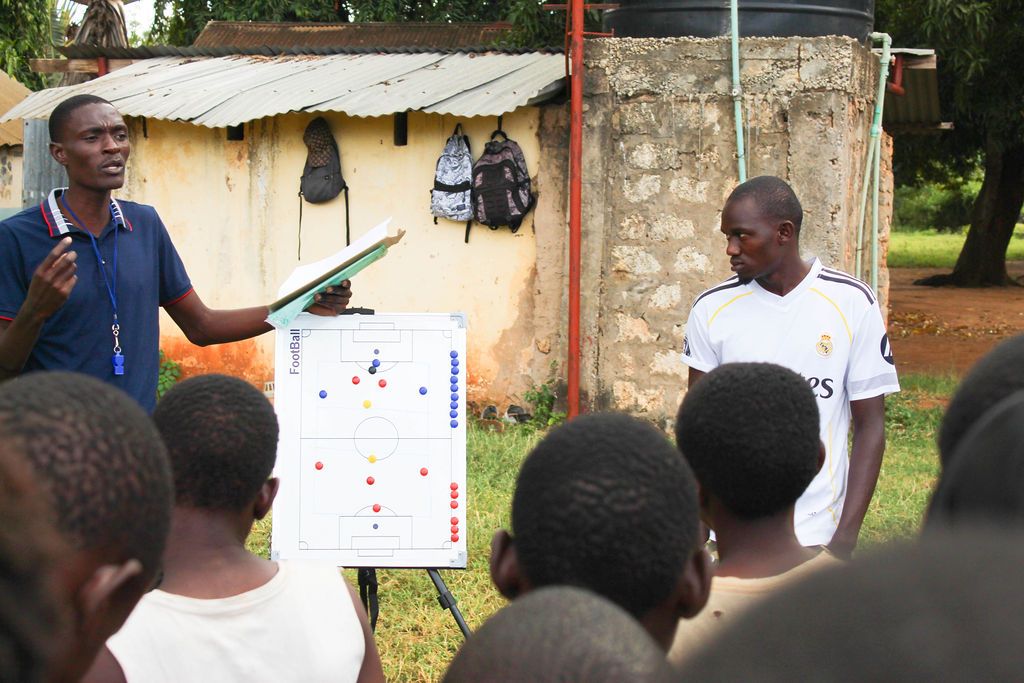
Mastering every phase of the game.
Our coaching curriculum systematically teaches three phases of play: In Possession, Out of Possession, and Transition.
In Possession Principles
When we have the ball, every player is an attacker thinking forward:
- Create width and depth to stretch opponent lines.
- Provide immediate support and passing angles around the ball.
- Create multiple passing options and numerical overloads.
- Play through, around, or over defensive pressure with composure.
- Move immediately after passing to create the next line.
- Create and exploit space between the lines.
- Maintain appropriate distances and attack with clear purpose.
Out of Possession Principles
When we defend, the whole squad defends collectively with purpose:
- Protect the central areas and force play into non-threatening channels.
- Stay compact horizontally and vertically to eliminate space.
- Recognise pressing triggers (bad touch, back pass, poor body shape).
- Apply active pressure with coordinated support and defensive cover.
- Protect the space behind the defensive line.
- Recover quickly into a solid defensive structure when possession is lost.
- Defend collectively — every player contributes to defending.
Transition Principles
Football is a continuous cycle rather than four separated moments:
- When we win the ball: Can we attack immediately and exploit disorganisation? If not, can we secure possession?
- When we lose the ball: Can we apply immediate counter-pressure to win it back within 5 seconds, or recover our defensive structure?
- Mental switch happens in milliseconds — no pausing or complaining.
- Seamless transition from defence to attack and attack to defence.
Player at the Centre
A Sporting Pearls coach never attempts to control every pass or joystick players. We stimulate understanding through smart questioning:
This develops self-reliant decision makers who solve problems independently on match day.
Training Should Look Like Football
We avoid isolated, line-based drills with no context. Our practices combine realistic elements:
We use small-sided games, rondos, position-specific scenarios, transition games, and functional finishing to replicate match demands.
The 7-step session process.
Every session delivered at Sporting Pearls follows a rigorous, pedagogical framework.
Plan
What does the player need to learn today?
Create
Design an appropriate practice environment.
Observe
Watch what the players actually do in game play.
Intervene
Step in only when it adds clear value.
Question
Encourage players to understand the problem.
Reinforce
Highlight and celebrate successful behaviours.
Review
Assess whether the objective was achieved.
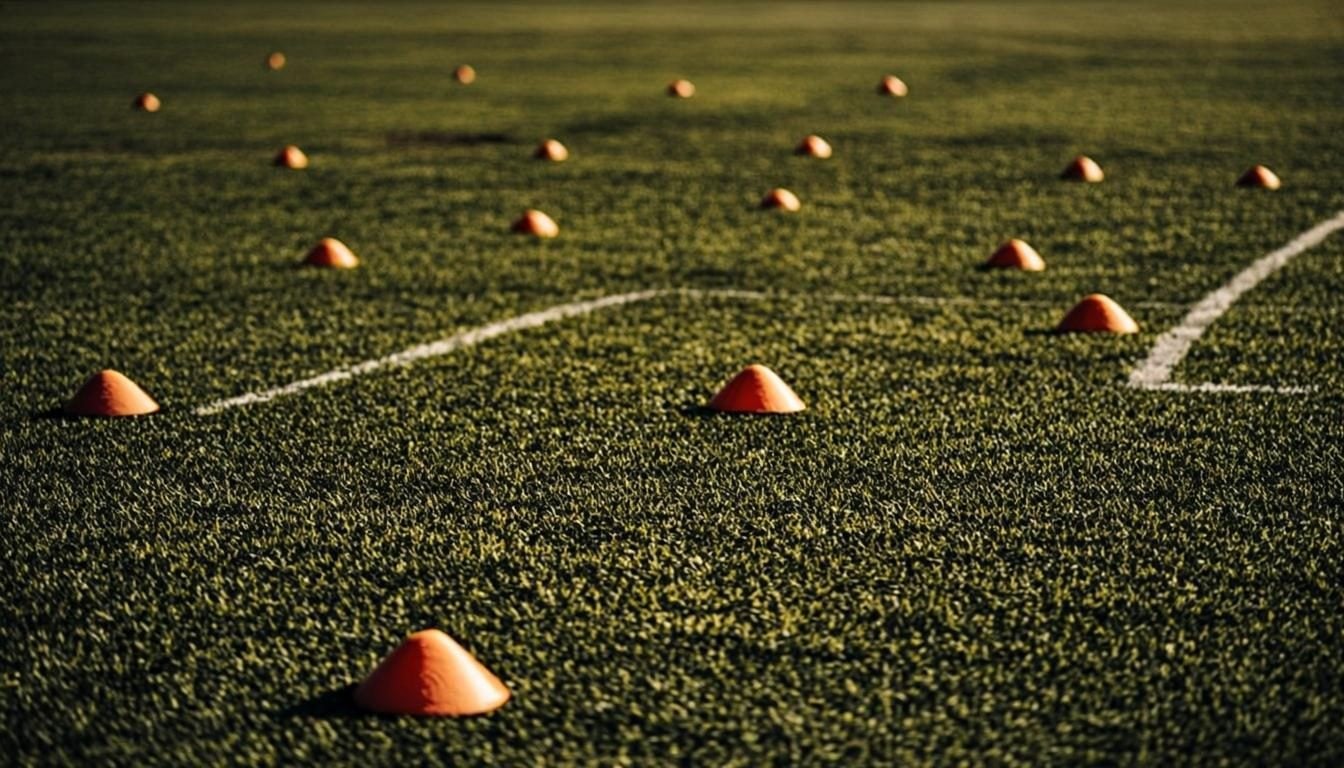
The coach as a role model.
At Sporting Pearls, coaches are educators first and trainers second. A coach cannot demand standards from players that they do not demonstrate themselves.
We believe not every mistake requires immediate interruption. When intervening, a coach asks: Does the player need information, a question, demonstration, encouragement, or simply another opportunity to try?
Meeting players at their stage of growth.
The objective is not to make children play like adults — it is to prepare them progressively for the demands of the next stage.
Movement & Ball Mastery
Emphasis on joy, coordination, fundamental movement, agility, creativity, and establishing a deep love for the ball.
Awareness & Decisions
Emphasis on technique under pressure, spatial awareness, decision-making cycles, and understanding team relationships.
Positioning & Competition
Emphasis on tactical understanding, positional mastery, pressing triggers, combinations, and competitive composure.
Professional Habits
Emphasis on high-performance execution, tactical adaptability, leadership, game management, and senior transition.

What our players feel every day.
Competitive results matter, but they never replace long-term development. Performance is important — development comes first.
Safe to explore skills without fear of harsh judgment.
Mistakes are seen as essential steps to mastery.
Encouraged to analyze, scan, and choose solutions.
Supported by positive, patient, and clear mentorship.
Personal discipline, self-drive, and character on and off pitch.
The Sporting Pearls Mantra
Every Sporting Pearls coach commits to: Plan with purpose · Coach with clarity · Develop with patience · Challenge with respect · Reflect continuously · Put player welfare first.